

Article: The Opportunity She Hands Over Before the First Sip

The Opportunity She Hands Over Before the First Sip
A woman executive sits at a business dinner, accomplished, capable, often the most senior person at the table. The sommelier hands the wine list to the man next to her. He didn’t suggest the restaurant. He isn’t hosting. She doesn’t correct him, not because she can’t read the list, not because she lacks taste or intelligence, but because somewhere along the way she learned that fine wine is a minefield. One wrong choice, and suddenly the authority she carries into a boardroom disappears behind a leather-bound menu. So she smiles, and says, “You choose.” And in that moment, she’s given away something far bigger than a bottle.
Fine wine is cultural currency. I’ve watched it operate this way for twenty years: the right bottle ordered without hesitation, the passing reference to a producer, a region, a vintage, that signals to everyone at the table that this person knows how rooms like this work. It functions the way golf opens up doors and builds relationships. Women dress to impress other women. Men order wine to impress other men. The difference is that one of those habits has a seat at the business table, and the other has been treated as a personal indulgence. Men learned it early. Most women were never invited to the lesson.
The fine wine industry spent decades making sure of that. Walk into most high-end steakhouses and the wine list reads like a catalogue built by and for male collectors, Napa Cabernets stacked three pages deep, trophy labels front and center. Wine publications wrote for that same buyer. And the sommelier hands the list to the man. It’s not malicious. It’s just deeply, boringly habitual.
Women purchase the majority of wine sold under twenty dollars. Female collectors at the top of the market remain rare, not because women lack interest, but because nobody spent much time making them feel welcome there. The message has been consistent enough that many women have simply internalized it.
The result shows up at dinner tables across corporate America. Women who negotiate multimillion-dollar deals and run large organizations hand the wine list to a male colleague without a second thought. When I ask why, I hear the same thing: “I don’t know enough.” The man across the table has no such hesitation. He may know nothing about what he’s ordering. It doesn’t matter. He was taught that the list belongs to him. That asymmetry is not about wine. It is about who is permitted to take up space.
What makes this particularly worth examining is that women are, by most measures, well-suited to what fine wine actually demands. I’ve seen this play out at every tasting I’ve ever run. Women who walk in saying they know nothing about wine are picking up nuance that experienced male collectors miss completely. The science backs this up, women consistently outperform men on smell discrimination, which is the whole game in wine evaluation. They just don’t trust what their nose is telling them.
The gap has never been aptitude. It’s that nobody handed them the list.
Here’s what I tell women who ask me where to start: you don’t need years of study. You need a few moves that actually work.
Work with the sommelier, not around them. Tell them what everyone’s eating and ask what’s drinking well right now in that price range. Point to a number on the list if you don’t want to say it out loud at a full table — sommeliers do this a hundred times a week and won’t blink. You can also just name something you’ve loved before and ask for something in that direction. That’s not a workaround. That’s exactly how people who know wine use a sommelier.
Have something to say about what you ordered. A region you’ve actually been to. A producer whose approach resonates with you. A bottle from a dinner that mattered. When the choice is genuinely yours, there’s nothing to defend. It opens a conversation instead of inviting a quiz.
When you need to signal that you know the room, stick to world class regions that have prestige: Napa Valley, Burgundy, Bordeaux, Champagne. You don’t need to know the producer since the region is already known for quality.
And when in doubt, match the country. French restaurant, French wine. Italian restaurant, Italian wine. It’s not a law, but it’s a dependable starting point, those lists are usually built by someone who cares deeply about the cuisine, and the wines are chosen to go with the food.
Women who build fluency in fine wine tend to use it differently than men have. I watch them use a bottle to bring someone into the conversation, to put a younger colleague at ease, to show generosity rather than score points. That’s not a consolation prize for doing it differently. That’s actually the more powerful move.
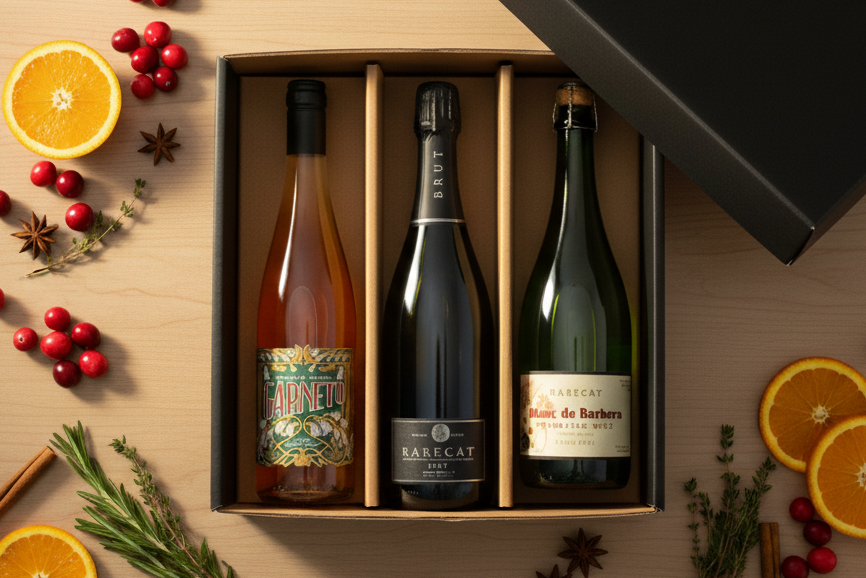
I am the founder of RARECAT Wines, where more than half of our collectors are women. I have a commercial interest in this. I have two decades of experience working with executive women on this exact terrain, and I’ve watched the same dynamic play out in cities across the country. The barrier is cultural. It has always been cultural.
The wine list is a tool. It has always been a tool. Pick it up.
Sharon Kazan Harris is the founder and winemaker of RARECAT Wines, produced in Napa Valley, Champagne, Bordeaux, and Russian River. She has spent two decades working with executive women on fine wine as a tool for business and life. This was an opinion piece posted on Substack.

Written by sharon Kazan harris